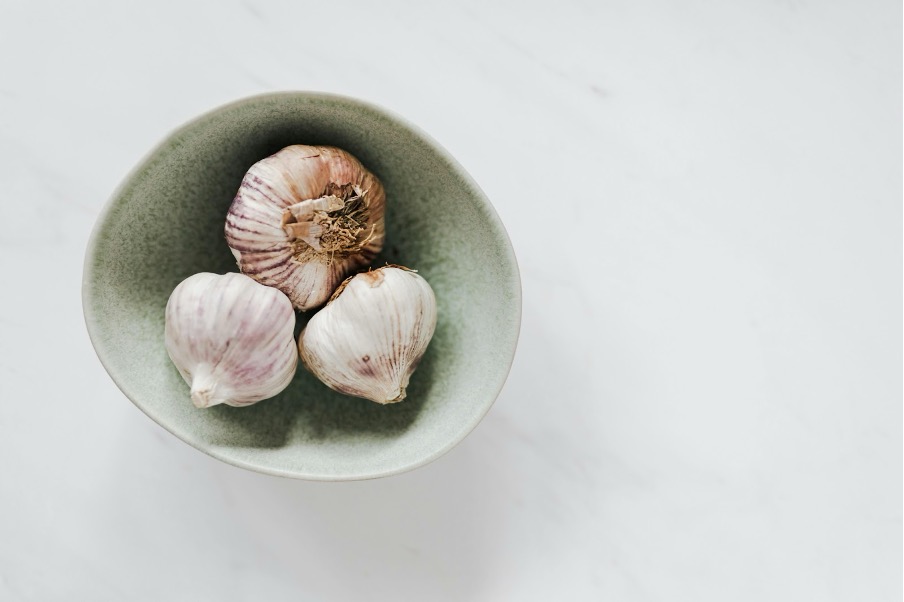
Garlic is one of the most popular cooking ingredients, with many health benefits. Garlic belongs to the genus Allium and is closely related to onion, leek, chive, and rakkyo onion, which is an Asian onion. It has been used for thousands of years and was popular in ancient Egypt, both for culinary purposes and for its therapeutic benefits.
It has a strong smell and a characteristic burning taste, which is due to the oils rich in sulfur compounds it contains, but it also has countless health benefits. Research shows a positive correlation with good cardiovascular function and reduced blood pressure. Thanks to its active ingredient, allicin, but also vitamins B1, B2 and B3, calcium, iron, phosphorus and selenium, garlic is antiseptic, antibiotic, antimicrobial, bactericidal and anticancer! It is worth noting that allicin works like an antibiotic and is released when garlic is crushed.
According to recent studies and meta-analyses (from 2018 onwards) garlic can contribute to maintaining a good lipid profile, but also to the reduction of LDL or “bad” cholesterol.
Even scientific data confirms that consuming garlic reduces the risk of heart disease and enhances heart health. These results are in turn confirmed by the British Heart Foundation, as its guidelines state that garlic extracts and garlic powder may help lower blood pressure. A 2016 meta-analysis of 20 studies also found that garlic significantly reduced blood pressure, with a greater reduction among participants with pre-existing high blood pressure. At the same time, numerous studies note a positive correlation of garlic consumption with reduced blood pressure and effective treatment for hypertension, as well as a significant strengthening of bone health.
At the same time, garlic can help with weight management, including weight loss, fat loss and waist circumference reduction. A 2023 study found that women with polycystic ovary syndrome who took garlic supplements saw reductions in weight and body mass index. One clove of garlic (3 grams) contains about 4.47 calories. This means it can also be a low-calorie option for flavoring dishes.
According to the National Center for Complementary and Integrative Health, eating a diet rich in vegetables from the garlic family may also reduce the risk of certain cancers, such as gastrointestinal cancers.